[HWPL]
[HWPL] HWPL's Religious Peace Education in Cambodia

“Peace Begins with Respect”: Religious Peace Education Camp Held in Phnom Penh, Cambodia
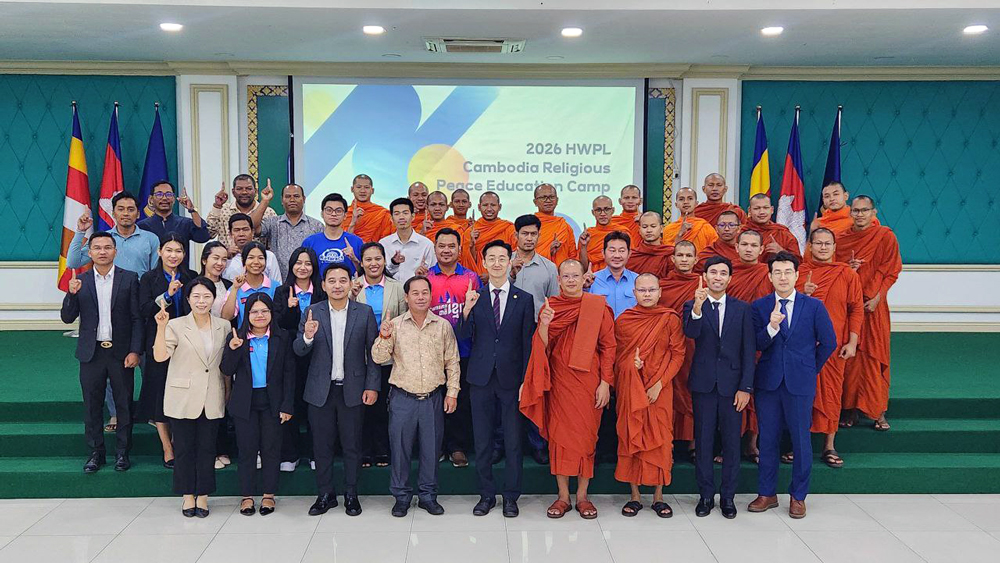
HWPL Cambodia Religious Peace Education Camp
On February 21, HWPL Global Branch 12 held the “2026 HWPL Cambodia Religious Youth Peace Camp” at Asia Euro University in Phnom Penh, Cambodia. The camp was jointly hosted and organized by Nonmony Pagoda led by Most Venerable, Dr. Sok Bunthoeun, HWPL Global Branch 12, and the IPYG. Approximately 100 participants, including religious leaders, social leaders, youth organization representatives, and university students, gathered to share the values of peace.
Amid ongoing tensions along the Cambodia–Thailand border, this camp was organized to reaffirm the fundamental values of religion—compassion, nonviolence, and harmony—and to empower the younger generation as active agents of peace.
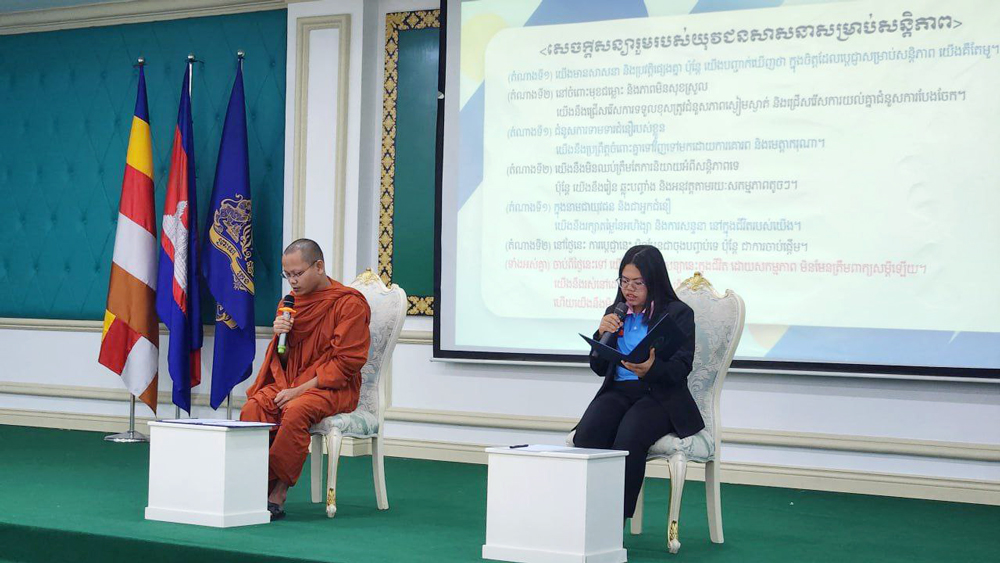
HWPL Cambodia Religious Peace Education Camp – Part 1 Talk Show
In Part 1 of the event, the meaning of peace was explored from the perspectives of both the religious and educational sectors.
Venerable Hong Veasnar of Wat Nuon Mony Ram Temple referred to the Cambodian traditional greeting “Sampeah,” emphasizing that peace does not begin with grand ideologies, but with respect in daily life. He explained that a lack of understanding and ignorance toward one another lead to fear and conflict, while compassion and mercy are universal values shared across religions.
Representing the education sector, Chhom Sopheak, principal of Prek Leap High School, stated, “Peace education is a process of cultivating attitudes of listening, empathy, inclusion, and gratitude. Helping students develop the ability to resolve conflicts on their own—that is what true peace education is.” He added that Prek Leap High School plans to establish a “Peace Club” to foster students’ conflict resolution skills and a culture of tolerance.
In the mini talk show titled “Religion and Peace,” participants engaged in dialogue based on attentive listening and mutual respect. Each group concluded their discussion by creating and presenting a “One Sentence for Peace,” demonstrating that interreligious understanding can go beyond theory and lead to real communication.
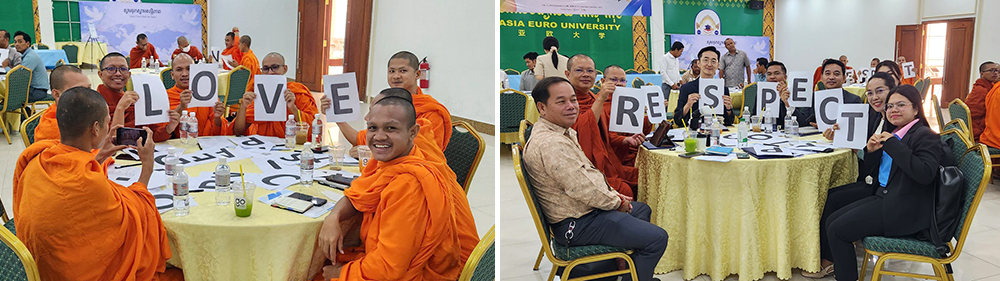
HWPL Cambodia Religious Peace Education Camp – Part 2 Peace Golden Bell
In Part 2, the role of youth in building peace was emphasized. Khean Ravyvuthika, president of the Rotaract Club of Phnom Penh Metro, stated, “For sustainable peace, the proactive role of youth is essential, and education must equip young people with the capacity to act for social harmony.”
Participants then took part in the “Peace Golden Bell” program, reflecting on core values such as solidarity and justice. They also read the “Religious Youth Peace Solidarity Pledge,” reaffirming their commitment to choose understanding over division and to practice peace through action.
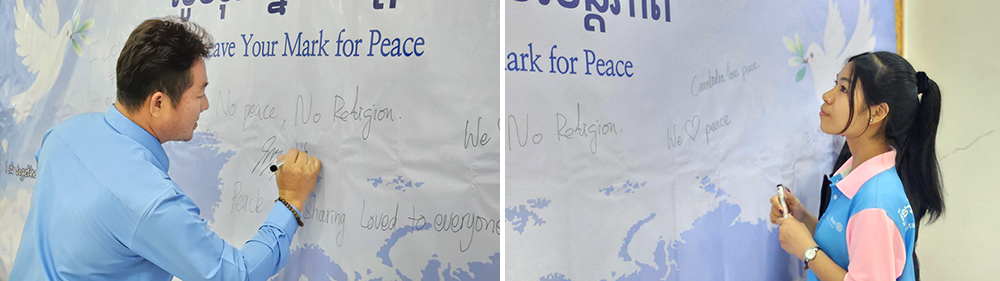
Peace Guestbook
In the final segment of the event, a video introducing HWPL’s peace activities in Cambodia and messages from youth were presented. The event concluded with a musical performance by Korean students centered on the theme of peace.
This camp was part of ongoing efforts to promote sustainable peace in local communities through cooperation between religious leaders and youth, through peace programs such as HWPL’s International Religious Peace Academy (IRPA) and IPYG’s Youth Empowerment Peace Class (YEPC). HWPL Global Branch 12 expressed its commitment to continue contributing to long-term stability and mutual understanding in Cambodian society through collaboration among religious leaders, educators, and youth.
HWPL Official Homepage


No comments:
Post a Comment