[HWPL]
[HWPL] HWPL's International Webinar on Marshall Islands’ Nuclear Legacy and Climate Crisis

HWPL Hosts International Webinar on the Marshall Islands’ Nuclear Legacy and Climate Crisis to Discusses the Need for International Cooperation
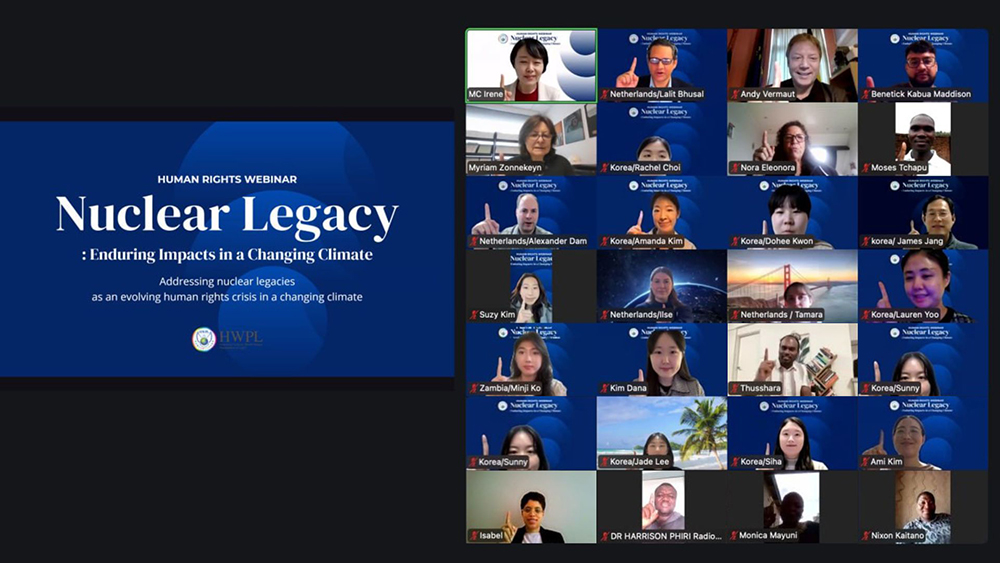
Ahead of Nuclear Victims and Survivors Remembrance Day, observed annually on March 1, HWPL held an international webinar on February 28 on the theme of the Marshall Islands’ nuclear legacy and climate crisis.
Experts in the fields of law, environment, and diplomacy, as well as representatives from civil society, from six continents took part in the webinar. The participants reaffirmed that the issue of nuclear contamination in the Marshall Islands is not merely a legacy of the past, but is emerging, in combination with the climate crisis, as a “global security concern” that threatens all of humanity. The webinar was particularly meaningful as a forum to urgently raise public awareness of this issue and explore ways to strengthen international cooperation.
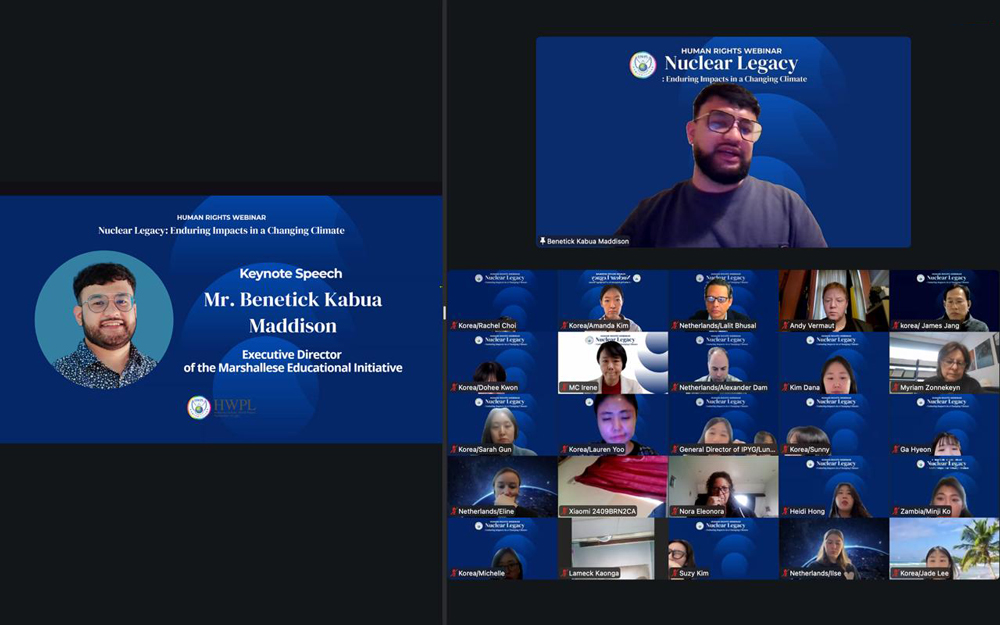
“The destructive force of 7,200 Hiroshima atomic bombs”… The devastating reality revealed through testimony
In his keynote address, Benetick Kabua Maddison, Executive Director of MEI, testified through specific figures to the scale of suffering endured by the Marshall Islands. “The 67 nuclear tests conducted in the Marshall Islands over 12 years beginning in 1946 had a destructive force equivalent to 7,200 Hiroshima atomic bombs. This not only completely transformed our land and traditions, but also left devastating health consequences such as cancer and congenital deformities,” he said, emphasizing the seriousness of the environmental and health impacts.
He particularly warned that the Runit Dome, where radioactive waste on a scale sufficient to fill 35 Olympic-size swimming pools has been buried, is at risk of cracking due to rising sea levels. He also stressed that environmental education, along with financial and technical support, must be provided so that young people can shape their own future, and that they must become key actors in the policymaking process.
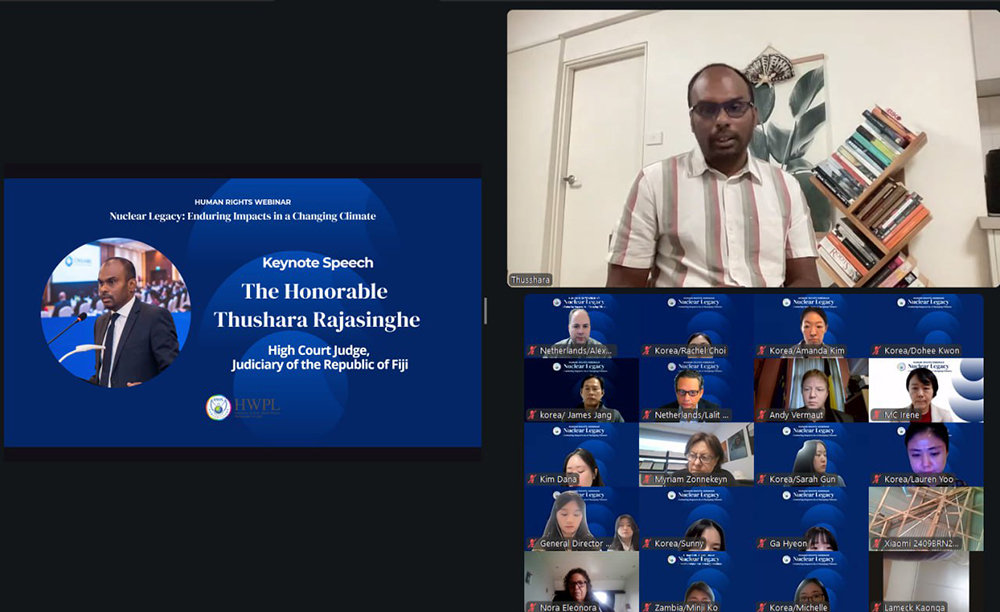
“Justice delayed is justice denied”… Legal responsibility and practical solutions
In his legal presentation, Honourable Justice Thushara Rajasinghe of the High Court of Fiji raised the need to define the extensive destruction caused by nuclear testing to ecosystems and human health as “climate harm.” He stated, “Past rulings of the International Court of Justice encountered procedural barriers, which limited their ability to deliver substantive justice,” and emphasized the importance of international legal responsibility and institutional responses to ecocide, the crime of severe environmental destruction. He also called on civil society to stand in solidarity to build systems for substantive compensation and preventive protection.
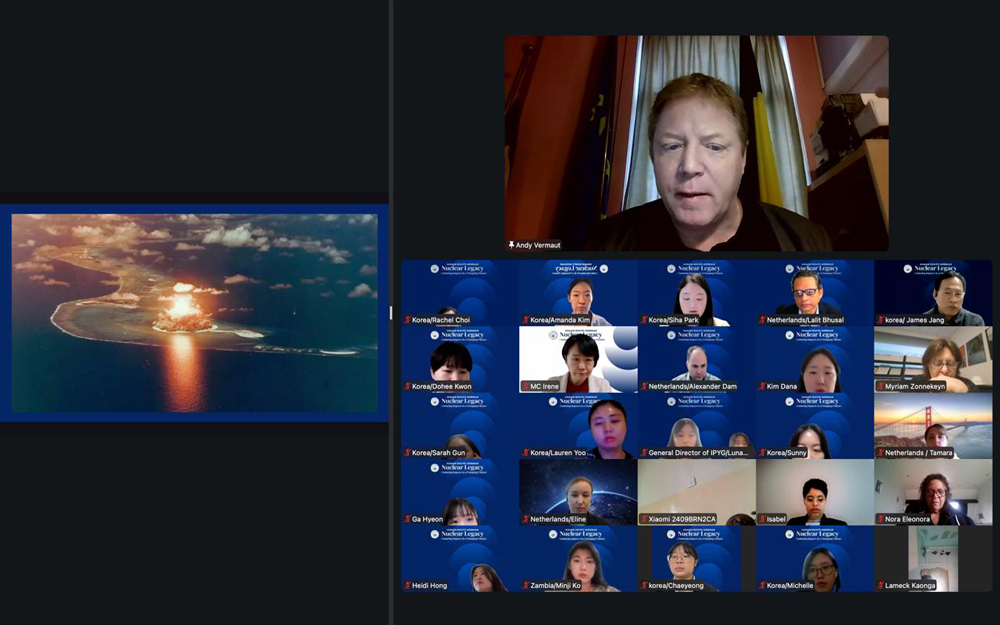
“A history that is not recorded disappears”… Restoring identity and mental health
Andy Vermaut, EU Climate Pact Ambassador, emphasized the need to preserve mental health and cultural identity while explained the importance of a community-based approach. “The loss of land must not mean the loss of their identity as well. Practical support is urgently needed to record and preserve their stories in order to overcome the intergenerational ‘nuclear trauma,’” he said.
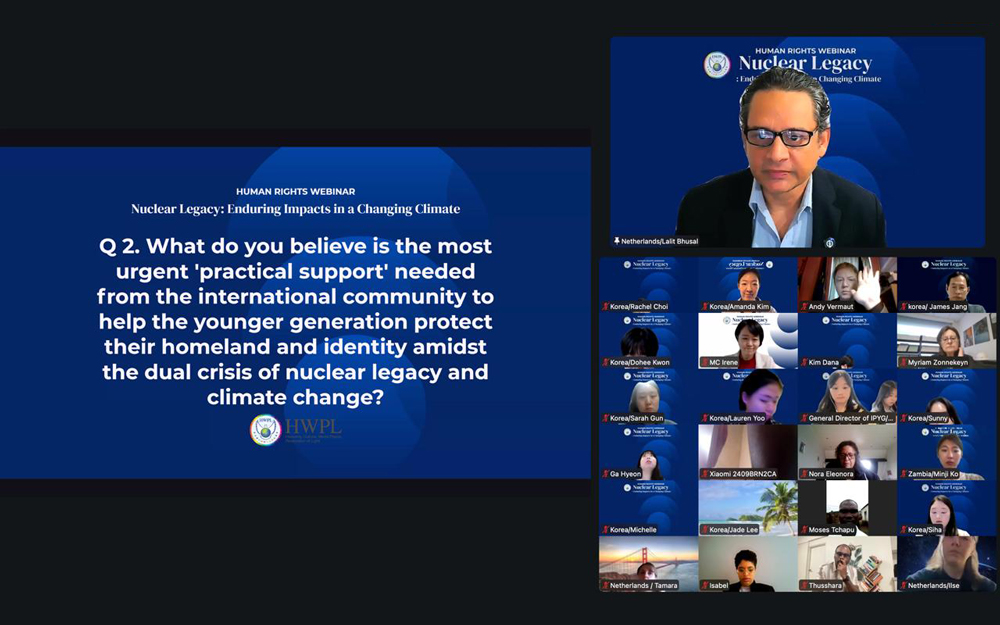
The participating experts shared the view that international cooperation and response are essential to address the combined challenge of nuclear legacy and climate crisis. In his congratulatory remarks, Hon. Hiroshi Vitus Yamamura, Member of Parliament, emphasized the urgency of international technical cooperation and legal coordination to mitigate the long-term impacts of the nuclear legacy. Lalit Bhusal, EU Climate Pact Ambassador, stressed that solidarity among civil society plays a critically important role in bringing this crisis into the global climate justice agenda.
The webinar concluded with discussions on technical, legal, and financial response measures to ensure the safety of contaminated areas. In particular, the importance of conflict prevention and the spread of a culture of peace was highlighted. Additionally it was noted that this also aligns with the need to promote a culture of peace as set forth in Article 10 of the Declaration of Peace and Cessation of War (DPCW). The participants acknowledged that responding to the environmental crisis and building peace are closely interconnected tasks sharing a common understanding of the need for international cooperation and sustained action for environmental protection and the institutionalization of peace.
HWPL Official Homepage


No comments:
Post a Comment