Thursday, January 27, 2022

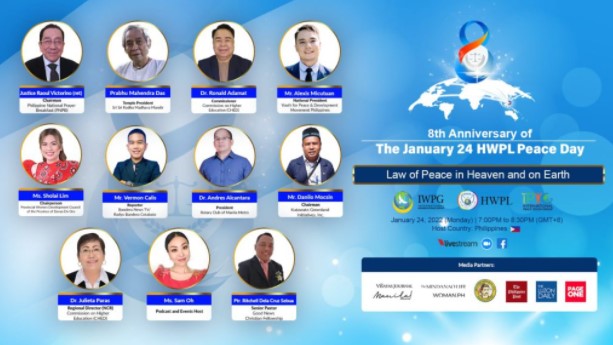
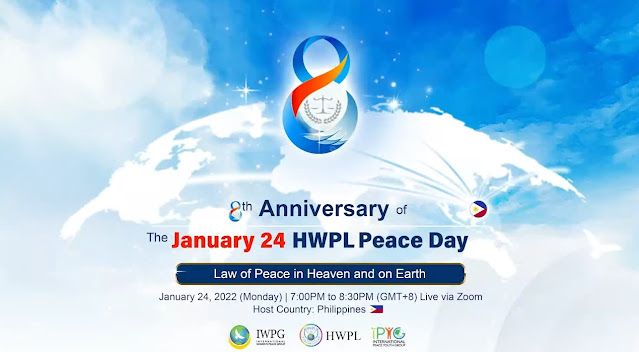
[HWPL] 8th Anniversary of the January 24th HWPL Peace Day was held in the Philippines!

 [HWPL]

[HWPL] 8th Anniversary of the January 24th HWPL Peace Day was held in the Philippines!


An international online peace conference was held to celebrate the 8th anniversary of a civilian-led peace agreement in Mindanao on the 24th of January. The day was designated as the HWPL Peace Day by the Province of Maguindanao and the Moro Islamic Liberation Front (MILF) in the Philippines.

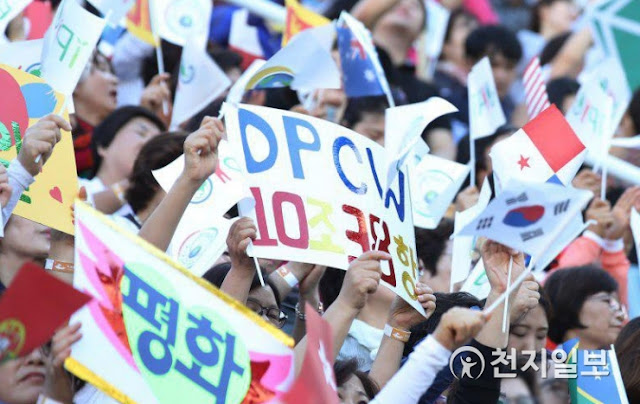
The event, under the theme of “Law of Peace in Heaven and on Earth” gathered more than 2,000 social representatives. In addition, this event served as a venue to raise public support for establishing an international law for peace based on the Declaration of Peace and Cessation of War (DPCW) and to promote interfaith harmony between religions.

The host organization, Heavenly Culture, World Peace, Restoration of Light (HWPL), is a non-governmental organization associated with the UN Economic and Social Council (ECOSOC) and the UN Department of Global Communications (DGC). Since 2013, the organization has been committed to various peace activities for world peace and the cessation of war.

HWPL Chairman Lee Man-hee visited the Philippines to contribute to the peace-building efforts in Mindanao starting with the peace agreement made on January 24th, 2014 between the Islam and Catholic communities through Hon. Esmael G. Mangudadatu, the then Governor of Maguindanao and Archbishop-Emeritus Fernando Capalla of the Archdiocese of Davao. Through the agreement, the Province of Maguindanao established January 24th every year as HWPL Peace Day in 2015 and built the first peace monument in the Philippines.


Since then, annual commemorative events such as grand peace festivals and interfaith conferences were continued to celebrate the peace agreement and raise awareness of peace among citizens in the Mindanao region. On the 2nd anniversary of the civilian-led peace agreement on January 24th, 2016, the unveiling ceremony of HWPL Peace Monument was held inside MILF's Camp Darapanan in Sultan Kudarat, Mindanao, while January 24th was also declared as a Peace Day by Hon. Ahod Ebrahim, Chief Minister of the Bangsamoro Autonomous Region in Muslim Mindanao (BARMM).

The event’s main speakers were Justice Raoul Victorino (ret), Chairman of the Philippine National Prayer Breakfast (PNPB), Prabhu Mahendra Das, Temple President of Sri Sri Radha Madhava Mandir, and Dr. Ronald Adamat, Commissioner of the Commissioner on Higher Education (CHED). Also, representatives from different sectors including law, education, youth, women, media, and more presented commitment messages towards peace.


Peace!

Tuesday, January 25, 2022

[Food] Jjinppang (Steamed Bun with Red Bean Paste, 찐빵)

 [Food]

[Food] Jjinppang (Steamed Bun with Red Bean Paste, 찐빵)


Jjinppang (Steamed bun with red bean paste, 찐빵) is a popular cuisine that you can easily find with the street vendor or at a steamed bun house or convenience store these days. It's a very familiar food for Koreans in the winter but actually its origin is not from Korea.

It originates from Japan during the Japanese colonial period, but we don't know who brought it to Korea. It was invented in Japan by the Chinese 'Lin Jjung In' who came to Japan with his monk friend Venerable Ryojan in 1341 A.D. Residing at Venerable Ryojan's temple without much to do, he wanted to sell pork buns as he did in China. However, at that time, Japan prohibited meat consumption so Lin stuffed his steamed bun with red bean paste, which the Japanese love.

Jjinppang became very popular in Korea after the Korean War, thanks to the US who supplied a tremendous amount of wheat flour to Korea to solve the country's poverty and hunger. The Korean government encouraged their people to cook and eat flour-based foods, so Koreans started to cook noodle and bread-based foods with wheat flour from the US.

Jjinppang restaurant in Anheung, the most well-known town for jjinppang in Korea


Jjinppang is hot, soft, spongy and sweet! That's why jjinppang is considered one of the best winter snacks in Korea. When you hold jjinppang in your palm and take your first bite, you'll momentarily forget the cold seeping through your bones. Its soft and silky red bean paste goes really well with hot steamed flour dough. Today, there are so many kinds of jjinppang filled with minced pork, chicken, pizza sauce, milk cream, custard, sweet potato paste, and more.


Steamed bread may vary slightly from house to house, but all of them are delicious, cheap, and hot. My favorite jjinppang house cooks very flat jjinppang with various kinds of colorful dough with mugwort, old pumpkin, pink cactus and black sesame :)

If you visit Korea in the winter and find a house full of steam and stainless pots, don't forget to buy jjinppang. The sweetness of red bean paste and dough will welcome you warmly :)

Bon Appétit!

Sunday, January 23, 2022

[HWPL] 10 Articles and 38 Clauses of DPCW (Declaration of Peace and Cessation of War)

 [HWPL]

[HWPL] 10 Articles and 38 Clauses of DPCW (Declaration of Peace and Cessation of War)


10 Articles and 38 Clauses of DPCW


Article 1 - Prohibition of the threat or use of force
1. States should solemnly reaffirm that they refrain from the use of force in all circumstances, save where permitted by international law, and should condemn aggression as constituting an international crime.

2. States should refrain in their international relations from the threat or use of military force against the territorial integrity or political independence of any state, or in any other manner inconsistent with the purposes of the United Nations Charter or international law in general.

3. States should prohibit any act or threat of violence, whatever its motives or purposes, that occurs for the advancement of an individual or collective criminal agenda.

4. States should abstain from interference in the internal conflicts of other States.


Article 2 - War potential

1. States should co-operate with a view to the gradual global reduction of armament production.

2. States should not produce, assist in, encourage, or induce; the production of weapons of mass destruction, inter alia, chemical, biological, and nuclear weapons, or weapons capable of causing indiscriminate or widespread and unnecessary suffering, or weapons incompatible with international humanitarian law.

3. States should take measures to ensure that existing weapons of mass destruction, weapons capable of causing widespread and unnecessary suffering and weapons incompatible with international humanitarian law are gradually dismantled or destroyed. States should cooperate in disarmament and the reduction of arms stockpiles, ideally under international supervision. Decommissioned weapons manufacturing facilities should be repurposed, so that they may serve purposes that are beneficial to humanity in general.

4. States should strive to reduce excessive standing armies and military bases.

5. States should cooperate to gradually diminish trade in weapons and attempt to reduce the flow of small arms to non-state actors.


Article 3 – Friendly relations and the prohibition of acts of aggression

1. In accordance with United Nations General Assembly Resolution 2625 (XXV), States should develop friendly relations based upon respect for the principle of equal rights and self-determination of peoples, and should take appropriate measures to strengthen universal peace.

2. States have the duty to refrain from any forcible action that deprives peoples of their rights to self-determination.

3. States should condemn the illegal occupation of territory resulting from the threat or use of force in a manner contrary to international law.

4. States should promote accountability, including by investigating alleged violations of international law, in particular, grave violation of the Geneva Conventions and their Additional Protocols, and should take measures to ensure that states, citizens and corporations do not contribute to the commission of violations of international law.

5. States should condemn, and should criminalize in their domestic law, the planning, preparation, initiation or execution, by a person in a position effectively to exercise control over, or to direct, the political or military action of a State, of an act of aggression which, by its character, gravity and scale, constitutes a manifest violation of international law, thus amounting to a crime of aggression.

6. States should refrain from allowing their territories to be placed at the disposal of other actors, whether States or otherwise, to engage in armed force against a third State.

7. States should bear in mind the principle of sovereign equality of states, and should seek to consult all other states, on the basis of reciprocal respect, on issues that may relate to them, in order to resolve and pre-empt disputes which may arise. This provision should apply without prejudice to human rights law and human dignity.


Article 4 – State boundaries

1. In accordance with United Nations General Assembly Resolution 2625 (XXV), every State has the duty to refrain in its international relations from military, political, economic, or any other form of coercion aimed against the territorial integrity or political independence of any State, or in any other manner inconsistent with the purposes of the United Nations. This is without prejudice to instances when such forms of coercion may be lawfully applied, inter alia, to induce states to cease internationally wrongful acts, or when sanctioned by the United Nations Security Council.


2. Every State has the duty to refrain from the threat or use of force to violate the existing internationally recognized boundaries of another State, or as a means of resolving international disputes, including territorial and frontier disputes, in a manner inconsistent with international law.


3. Every state has the duty to refrain from any act of incitement, planning, preparation, initiation or commission of an act of aggression by a state, a group of states, an organization of states or an armed group or by any foreign or external entity, against the sovereignty, political independence and territorial integrity of any State.


Article 5 - Self-determination

1. The duty of every state to refrain from the threat or use of force against the territorial integrity or political independence of any other state includes the duty not to engage in any action that would result in the dismemberment of any state, or force the secession or annexation of any territorial unit from that state.

2. Subject to the right to self-determination of peoples, states shall not engage in any intervention that seeks to divide or separate a state in a manner that is contrary to the rules of international law.

3. Every state has the duty to refrain from prematurely recognising an entity that has purported to secede from another state, until such a time as the latter entity has developed the necessary attributes, capacities and legitimacy to function as a state.

4. Subject to the provisions of the present article, States should encourage identifiable nation-states that have been divided by longstanding external or historical factors to engage in co-operation and dialogue. States should ensure that divided peoples are provided with their right to self-determination, including, inter alia, measures which may result in unified government.

5. Any political system in which power is exercised in perpetuity by an individual or regime amounting to a manifest denial of the right to self-determination should be condemned.


Article 6 - Dispute settlement

1. States should recognize the obligation to settle their international disputes through peaceful means including reference to the International Court of Justice, other judicial bodies, regional judicial arrangements, or through arbitration, mediation, conciliation, or other forms of alternative dispute resolution and in such a manner that international peace and security are not endangered. States should carry out any judgment or decision reached by a judicial body in good faith.

2. All states are encouraged to accept the compulsory jurisdiction of the International Court of Justice, in accordance with Article 36, paragraph 2, of the Statute of the Court, without reservations, as a means of ensuring that disputes are settled peacefully and in accordance with international law.


Article 7 - Right to self-defence

1. Nothing in the present Declaration should be construed so as to impair the inherent right to individual or collective self-defence if an armed attack occurs against a State, until such time as the Security Council has taken measures to maintain international peace and security.

2. Measures taken by states in the exercise of their right to self-defence should be immediately reported to the Security Council and should not in any way affect the authority and responsibility of the Security Council under the United Nations Charter to take, at any time, such action as it deems necessary in order to maintain or restore international peace and security.


Article 8 - Freedom of religion

1. States should unite to strengthen international efforts to foster a global dialogue for the promotion of a culture of tolerance and peace at all levels, based on respect for human rights and diversity of religions and beliefs.

2. States should activate and participate in systems to enforce and protect fundamental human rights, eliminating discrimination on the basis of religion or belief, and should refrain from and prohibit the usage of religion by governments, groups, or individuals in order to justify or to incite acts of violence against others. These systems should include, inter alia, judicial mechanisms.

3. States should foster religious freedom by allowing members of religious communities to practice their religion, whether publicly or in private, and by protecting places of worship and religious sites, cemeteries, and shrines.


Article 9 – Religion, ethnic identity and peace

1. States should engage in multilateral consultations to deal with situations where differences attributable to religion or ethnicity pose a threat to peace so that necessary remedial action may be taken and to identify the root causes of a situation causing tension between different religious or ethnic groups, in order to adopt necessary measures to promote mutual understanding between the groups concerned.

2. States should take measures to ensure that religious belief or ethnic identity are not utilised as a pretext for gross and systematic acts of violence. In circumstances where individuals or groups perpetrate or assist in such acts in the name of their religion, states should take adequate measures that lead to the prosecution and punishment of such activities.

3. Recognising the threat to peaceful coexistence that violent religious extremism may cause, states should implement, in good faith, legal measures against individuals or groups attempting to perpetrate or assist in gross and systematic acts of violence in the name of religion. Such measures should, in extreme cases, include the proscription of faith groups – including sects or cults – that perpetrate acts of violence against the territorial integrity and political independence of any state.


Article 10 – Spreading a culture of peace

1. States should recognize and engage with groups and organizations that seek to further the cause of peace as a global movement. States should facilitate such groups in their awareness-raising activities, including providing tuition in human rights and peace studies, as provided for, inter alia, in the Universal Declaration of Human Rights and the 1999 UN Declaration on a Culture of Peace.

2. States should recognize that, in order to preserve a lasting culture of peace, public awareness of the need for, and value of, peace should be created. In this regard, states are encouraged to facilitate activities, commemorations, and initiatives that engage public consciousness with peace, including the erection of peace monuments as an alternative to war monuments.

3. Heads of state and heads of government should acknowledge that they are uniquely well placed to encourage a culture of peace, and should act to support this declaration to bring about the cessation of war.

4. States should promote a culture of peace including ensuring conditions in which-
(a) citizens are able to participate in the political affairs of the state as equals regardless of religious or ethnic differences;
(b) a free media is maintained which allows grievances to be aired and addressed;
(c) education is imparted to promote respect and mutual understanding among different religious, belief and ethnic groups;
(d) the right to development of peoples, including the achievement of the UN sustainable development goals, can be realized; and
(e) the wellbeing of all human kind with the participation of women and men to ensure peaceful coexistence amongst nations, states, and peoples may be guaranteed.


Peace!!
Tuesday, January 18, 2022

[HWPL] 21 Global Legal Experts and the Birth of the ‘DPCW': Together for 'Cessation of War and World Peace'

 [HWPL]

[HWPL] 21 Global Legal Experts and the Birth of the ‘DPCW': Together for 'Cessation of War and World Peace'


Members of HWPL International Law Peace Committee


Through the founding of the 10 articles and 38 clauses of the global "Declaration of Peace and Cessation of War (DPCW)", a novel solution for peace has sprung forth which has drawn eyes of the world. 21 global legal experts have contributed to the creation of the 10 articles and 38 clauses of the DPCW, which is the solution for peace in a world tainted by conflict and which can bring about an end to the Korean War through denuclearization.

During an overseas peace tour led by HWPL Chairman Man-hee Lee, legal experts of different nationalities and religions gathered. Those who commended this 'international law for the cessation of war’ proposed by Chairman Lee centered their work of peace around the DPCW and became one, transcending border, creed and race for peace that mankind has only dreamt of.

Notable figures include the "father of the Bangladeshi Constitution", former Attorney General Dr. Kamal Hossain, who graduated from Oxford University with a doctoral degree in International Law, works as Barrister and Senior Advocate of the Supreme Court of Bangladesh and ensured that the will of Chairman Lee was embedded within the DPCW. He has also made a significant contribution to his own peace work and recommended his student, Dr. Mohammad Nazrul Islam (Professor of International Law, University of Dhaka, Bangladesh) to finalize the drafting of the DPCW.

In addition, leading legal experts were encouraged to participate in the founding work of the DPCW.

President of the World Jurist Association, Dr. Franklin Hoet-Linares (Venezuela) personally reviewed the draft DPCW and delivered his feedback. He vigorously urged for the adoption of the DPCW as a resolution by the World Jurist Association. Pravin H Parekh, President of the Indian Society of International Law, and Dr. Fathi Kemicha (Tunisia), member of the International Law Association and the United Nations International Law Commission (ILC), both actively participated in the creation of the DPCW and throughout the advisory process.

The 21 legal experts who contributed to the drafting of the DPCW include: President of the International Law Association (ILA), Professor Said El-Dakkak (Egypt); former Chief Justice of Nepal, Kedar Nath Upadhyay; former chairman of the Arbitration Institute of the Finland Chamber of Commerce, Gustaf Möller; Secretary General of the International Law Association (Brazil), Arnaldo Sobrinho de Morais Neto; Professor and lawyer of international human rights, John Kirk Boyd (USA); and Professor of International Law at the University of Lisbon, Manuel de Almeida Ribeiro.

The DPCW is an acronym of the Declaration of Peace and Cessation of War that was proclaimed by Chairman Manhee Lee of Heavenly Culture, World Peace, Restoration of Light (HWPL) to an audience of 30,000 youth from 130 countries on May 25th 2013.


Peace!
Monday, January 17, 2022

[Food] Saeu-ganjeong (Sweet and Spicy Deep Fried Shrimp, 새우강정)

 [Food]

[Food] Saeu-ganjeong (Sweet and Spicy Deep Fried Shrimp, 새우강정)


Any dak-ganjeong (Sweet and Spicy Deep Fried Chicken, 닭강정) restaurant in cities near the East Sea of the Korean peninsula cooks Saeu-gangjeong (Sweet and Spicy Deep Fried Shrimp, 새우강정). Fishermen by the East Sea catch lot of shrimp, and that's why deep fried chicken restaurants in cities by the East Sea sell deep-fried shrimp too.

No one knows who invented saeu-ganjeong but everyone knows that deep-fried shrimp covered with sweet and spicy sauce tastes greater than common deep-fried shrimp :)

A few days ago, I visited Sokcho (one of the cities by the East Sea coast) and visited the Deep Fried Food block of Daepo Port in Sokcho. Daepo Port is famous for its seafood and it also sells many deep fried seafoods. There's one deep fried shrimp place that I love to frequent :)

Daepo Port in Sokcho

Deep Fried Seafood Place


Saeu-ganjeong (Sweet and Spicy Deep Fried Shrimp, 새우강정)


They don't peel shrimp shell, they deep fry the whole shrimp including its head, legs and tail. The deep fried shrimp shell  gives an even crispier texture, which goes well with a sweet and spicy sauce.

If you ever visit cities in the East Sea coast, go to a seafood market and try saeu-ganjeong please. I'm so sure that saeu-ganjeong can be one of your best deep fried foods :)


Bon Appétit!

Wednesday, January 12, 2022

[HWPL] "Good News for Mankind": Leading Dignitaries Share their Opinions of the DPCW

 [HWPL]

[HWPL] "Good News for Mankind": Leading Dignitaries Share their Opinions of the DPCW


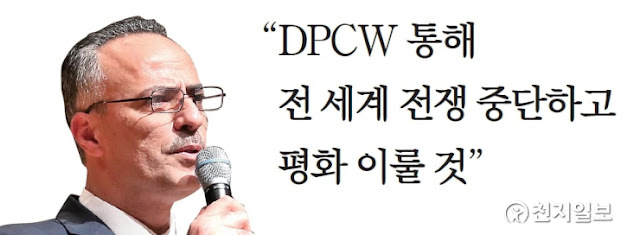
The Declaration of Peace and Cessation of War (DPCW) is an international law drafted by the HWPL International Law Peace Committee, which is comprised of HWPL (Heavenly Culture, World Peace, Restoration of Light) Chairman Man-hee Lee and global legal experts, to be enacted for the cessation of war. It contains groundbreaking content that excludes national interest and fundamentally prohibits religious conflict. This section summarizes the reactions of international law scholars who participated in the drafting of the DPCW, as well as citizens of every country who were introduced to the DPCW.

Ali Abu Diak, Former Minister of Justice of Palestine

"It (the Declaration of Peace and Cessation of War) is considered a culmination for all International Conventions and Treaties to which the State of Palestine has joined and committed itself to, and is intended to renounce armed conflicts and to stop wars and is an important turning point for the protection of Human Rights regardless of nationality, residence, gender, race, religion or language.”


Fathi Kemicha, Member of HWPL International Law Peace Committee

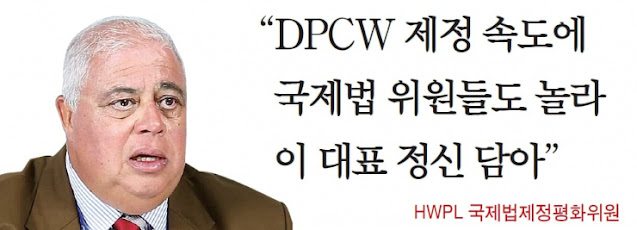
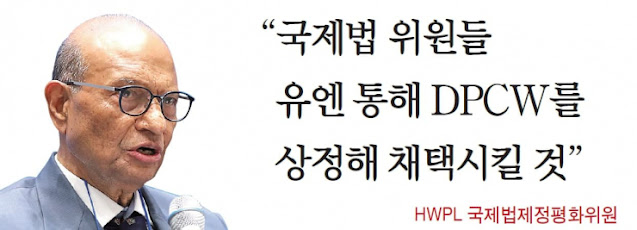
"Chairman Man-hee Lee said that it had to be completed by March, so I prepared this declaration with great effort and am releasing it today. I thought it would take several years, but even the international law members are really surprised that the declaration has been published in six months. Above all, I have tried hard to put the will of Chairman Man-hee Lee in this declaration. In the future, we will make every effort to ensure that this international law is introduced through the United Nations."


Nachiket Anil Dave, Attorney of Supreme Court of India

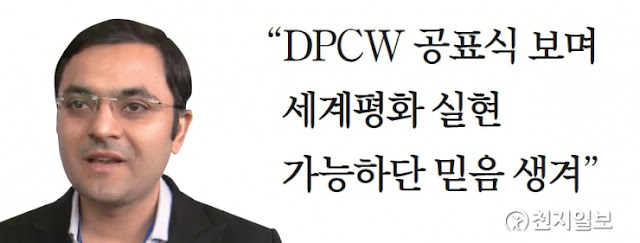
"I am very happy to know Man-Hee Lee, the chairman of such a wonderful organization which is a platform for world peace. Watching the proclamation of the DPCW today, I thought that world peace can become a reality. Seeing the chairman produce these results through his unremitting efforts gives me faith that he can achieve world peace. Today, this declaration will be remembered as a very important day for future generations."


Given Lubinda, former Minister of the Ministry of Justice of Zambia

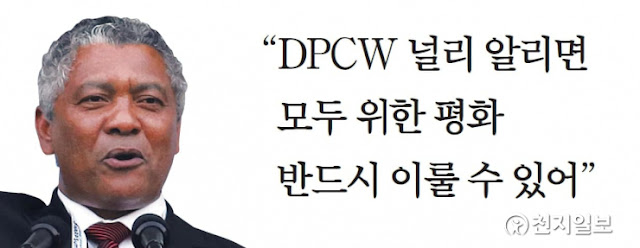
"We have a mission to widely publicize the Declaration of Peace and Cessation of War (DPCW). Peace for all can be achieved if we, who attended the WARP Summit, ourselves connect more people to this peace network."


Cardigua Lorient, Judge of the High Court of Rwanda

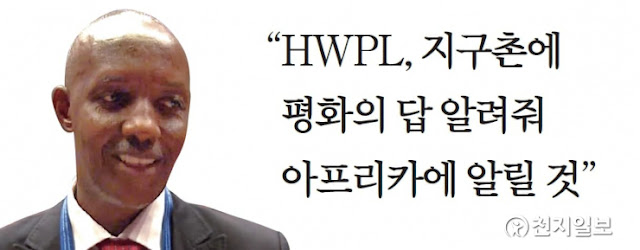
"The proclamation of the DPCW was a really great event. Our world is experiencing many conflicts, and HWPL is an important organization that teaches people around the world how to achieve peace. We will actively share what we learned from this event throughout Africa."


Pravin Parekh, Member of HWPL International Law Peace Committee

"Today will be remembered as an important day in an effort to achieve global peace. We will adopt the DPCW through the United Nations."


H.E. Ivo Josipović, Former President of Croatia

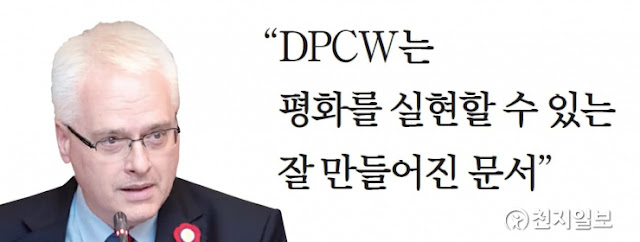
"The DPCW created by HWPL is a well-crafted document that can bring about an end to war and peace. The DPCW cannot be presented to the UN right away, but if it is actively reported, the presidents of each country will also sign it and bring it to the United Nations for international law."


Verónica Macamo, Minister of Foreign Affairs and Cooperation of the Republic of Mozambique

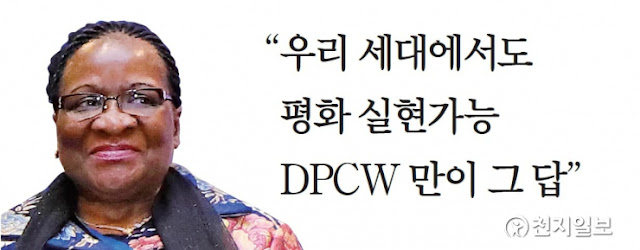
"I believe that peace can be achieved through the Declaration of Peace and Cessation of War (DPCW) and I hope that all nations will be able to attain peace not only for our future generations but in our current generation as well.”


Anna Cervenakova, Member of HWPL International Law Peace Committee

“Peace is closely connected to the protection of human rights, as human rights can be exercised only in a peaceful a free environment. Armed conflicts, acts of terrorism, unlawfulness, present unprecedented mobility of people leaving a place of armed conflict, injustice and violations of human rights represent a threat to the very essence of peace. HWPL with its proposal of Declaration on Peace and Cessation of War is preserving the culture of peace.”


Peace!

Saturday, January 8, 2022

[Food] Yeolmu Kimchi (Young radish kimchi, 열무김치)

[Food]

[Food] Yeolmu Kimchi (Young radish kimchi, 열무김치)


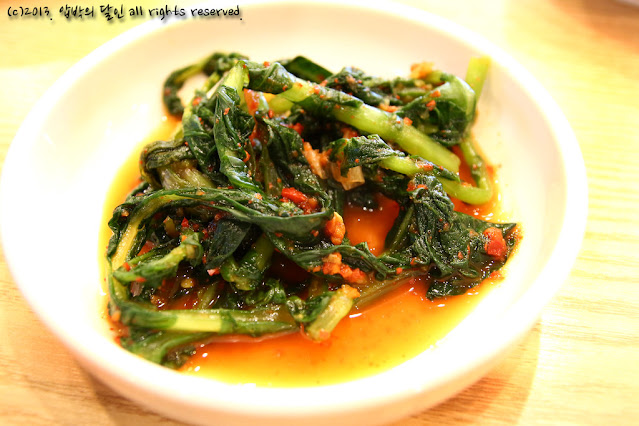
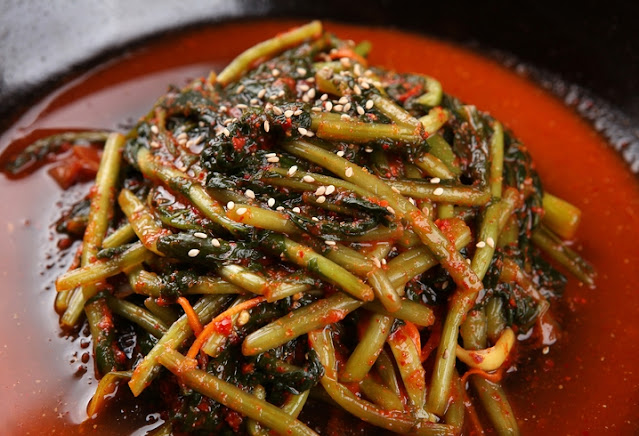
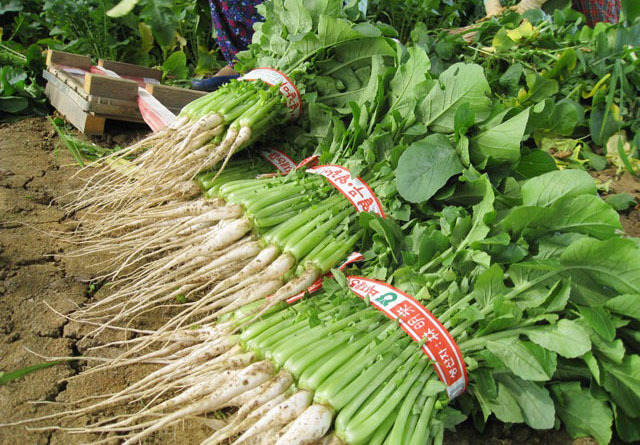
Yeolmu (Young radish, 열무) originates from Palestine. We don't know when it came to the Korean peninsula, though I personally think it may have come via the Middle East and China by silk-road traders. Yeolmu means 'young radish' in Korean. It has grown bigger with a wider stem and leaf for a tastier tender and crispy texture.

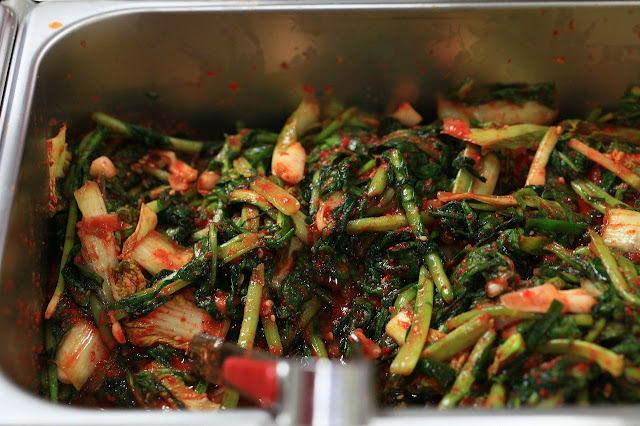
It's harvested from June to August when Korea endures its hot summer. Naturally, yeolmu provides its best taste in summer. Koreans make spicy, sweet and refreshing yeolmu kimchi with spicy chili seasoning and fermentation. Yeolmu is usually made with plentiful juice and seasoning, and people love to eat cold noodles and barley rice with it.


The uniquely tangy, spicy, sweet and refreshing flavor of yeolmu kimchi is distinctive from other types of kimchi that are made in autumn and winter. Yeolmu kimchi is known as kimchi for the hot summer, I have hardly met any Korean who dislikes yeolmu kimchi in the summer hot days. It goes well with barley rice, though my personal favorite is yeolmu kimchi cold noodle :) Its taste harmonises well with any kind of cold soup noodle with its juice.


Yeolmu is full of vitamin A, vitamin C, potassium, saponin and dietary fiber, and also has collagen and anti-oxidant stimulants. I can confidently say that yeolmu is one of the most flavorsome weight loss recipes :)

How about making some yeolmu kimchi if you are going through an arduous summer? I'm sure that yeolmu kimchi will soothe your body and soul :)


Bon Appétit!

Tuesday, January 4, 2022

[HWPL] The 5th WARP (World Alliance of Religions' Peace) Summit, Guest Speakers Share their Impressions

 [HWPL]

[HWPL] The 5th WARP (World Alliance of Religions' Peace) Summit, Guest Speakers Share their Impressions


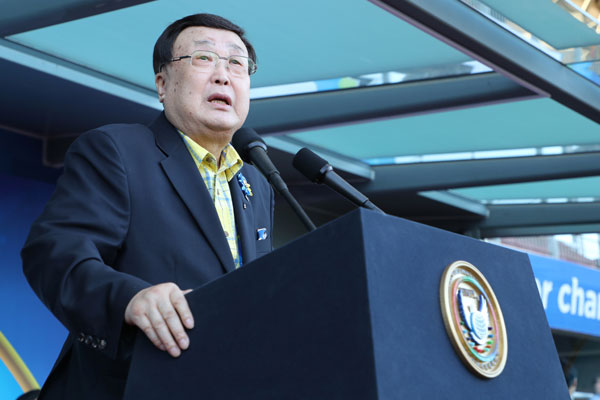
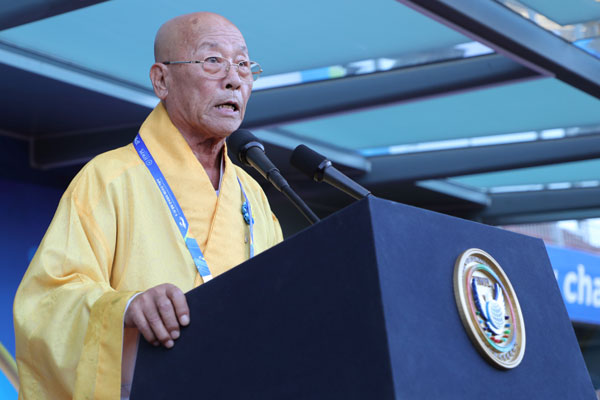
Heavenly Culture, World Peace, Restoration of Light (HWPL, Chairman Man-hee Lee) hosted the ‘5th Annual Commemoration of the WARP (World Alliance of Religions' Peace) Summit’ at Suwon World Cup Stadium on September 18th 2019, where crowds passionately cheered on the work of peace


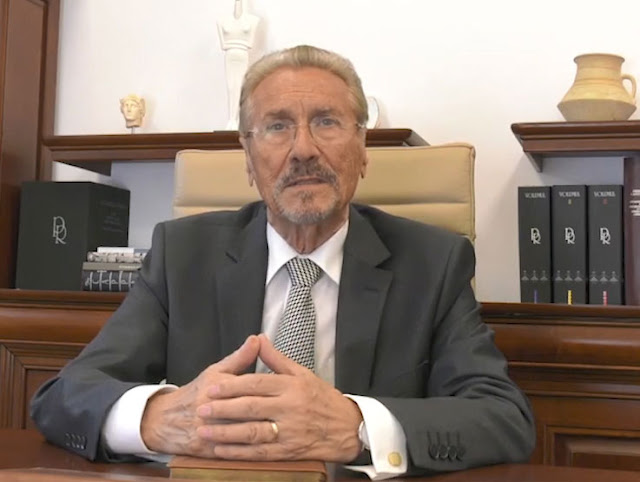
Emil Constantinescu, Former President of Romania

"The 9.18 WARP Summit is a very important event that brings together experts, professors, representatives of civic groups, decision makers, and stakeholders to create policies and tools to implement peace education and a genuine culture of peace."


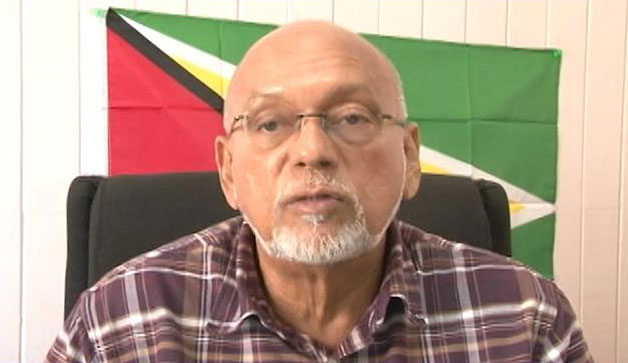
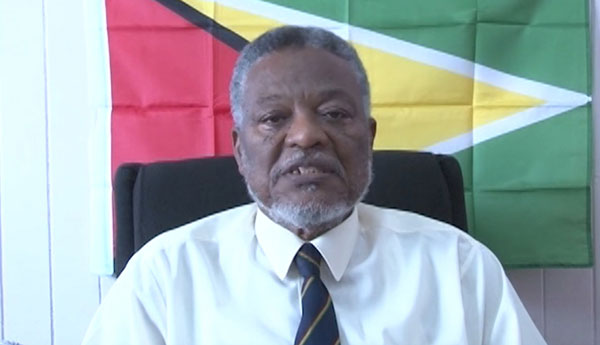
Donald Ramotar, Former President of Guyana

"The commemoration ceremony of the WARP Summit is held at a very important time in relation to world peace. HWPL's leadership and everything it does must be supported. HWPL will achieve world peace. We fully support HWPL and wish for the success of the event."


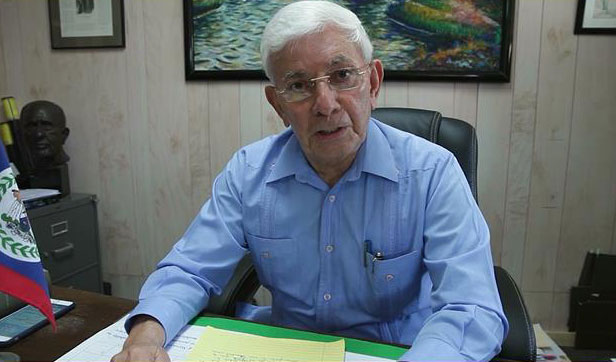
Said Musa, Former Prime Minister of Belize

"Here in Belize and other Caribbean countries, current and former leaders will unite in pursuit of peaceful means, dialogue, and conflict resolution through law and justice to achieve the DPCW's vision and goal of eradicating the structures of inter-state violence and conflicts."


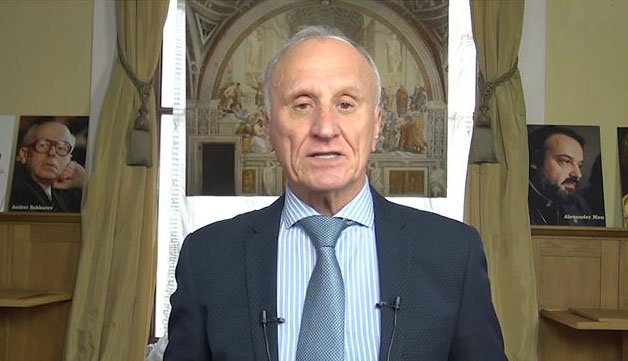
Gennady Bourbulis, Representative of the Baltic Black Sea Forum

"HWPL's peace movement will change the wrong thoughts and attitudes of people around the world and greatly contribute to the establishment of a noble world order for a culture of peace."


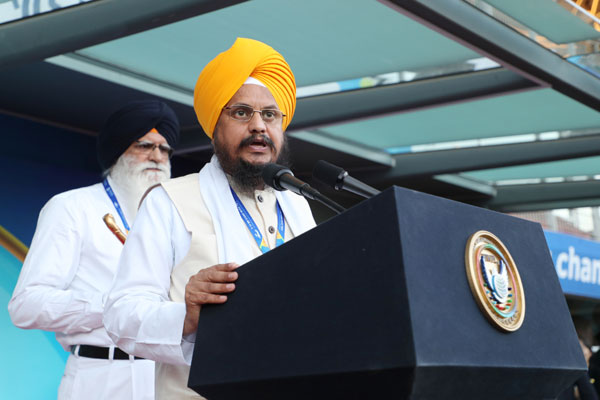
Giani Harpreet Singh, Former Head Granthi (Sikh priest) of the Golden Temple

"We hope that the DPCW, the noble goal of HWPL, will be adopted as a resolution by the General Assembly of the United Nations to become a binding international law. Through this, world peace in its true meaning will finally be achieved."


Samuel Hinz, Former Primie Minister of Guinea

"At the time of independence, Guyana had border problems with two neighboring countries that had been raised since colonial times. Great efforts have been made to resolve this border issue, and the DPCW has come up with a solution."


Yi Yoon-su, Doyen Member of The Republic of Korean Parliamentarian Society

"As long as the global leader Man-hee Lee and you are here, I would like to say that ‘eternal peace’ will surely come true. I traveled all over the country and gave many speeches, but this is the first time I've seen people show such unity like you."


Venerable Seokeuicheon, Chief Vice Chairman of Korean Buddhism Supreme Patriarch Association

''I was deeply moved attending HWPL's event, where the 10 articles and 38 clauses of the DPCW was proclaimed, and seeing many religious people support an international law that can end wars be put before the General Assembly of the United Nations. I was also determined to support it."


Peace!!