Showing posts with label Korean seafood. Show all posts

Tuesday, December 28, 2021

[Food] Dorumook (Sailfin sandfish, 도루묵)

 [Food]

[Food] Dorumook (Sailfin sandfish, 도루묵)


One day, after a battle with enemies at the border, Yi Sung-gye (1335~1408 A.D.), who was a well-known politician and general in the Goryeo dynasty, was exhausted and famished. He and his army visited a village on the way home, and asked the people of the village to give them some food. As the village was located near the East Sea, the people brought them some fish. Yi Sung-gye found the fish so delicious that he asked them its name, to which the villagers replied, "Mook". Yi Sung-gye thought the fish deserved a better name, so he told the villagers, "From now on, call this fish 'Eun-eo (Silver fish)'".

Decades later, Yi Sung-gye destroyed the Goryeo dynasty and became the founder and first king of the Chosun dynasty. Again, one day, as he sat on his throne, he reminisced about the fish he had eaten on his way home after the fierce battle. He ordered his vassals to bring 'Eun-eo' from the village. However, when he took a bite of well-roasted 'Eun-eo', he was very disappointed with its taste and he said, "Doru 'mook' ira haera (Return it to 'mook')".

Therefore, today, sailfin sandfish is called 'Dorumook' in Korean, meaning 'Returned to mook'. Today 'dorumook' also means 'futile effort', 'back to nothing' or 'useless', which is very obvious when we think of the story of dorumook, which was once-called 'Eun-eo'.
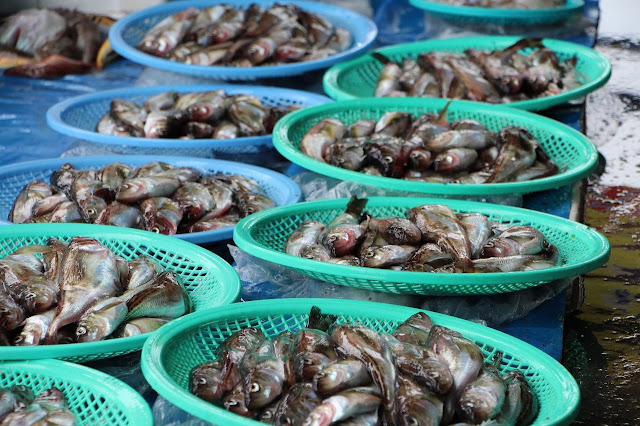
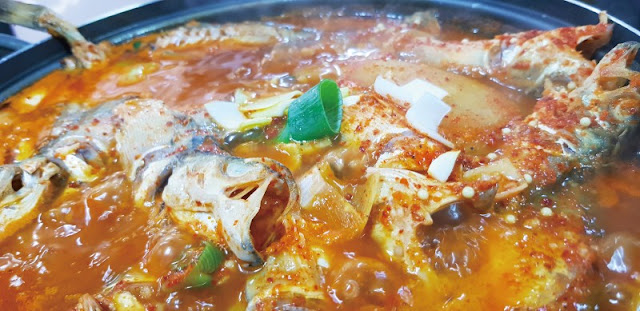

Dorumook is usually eaten in the north-eastern coastal area and Akita prefecture of Japan, and is caught from November to December during Dorumook's spawning season. It tastes very plain and dry, so one can understand why it is called 'sandfish'. Despite the taste of dorumook, some cities in Gangwon province (north-eastern region of South Korea) host a Dorumook festival to attract tourists during the winter. Some people love eating dorumook, though personally I do not like its taste.
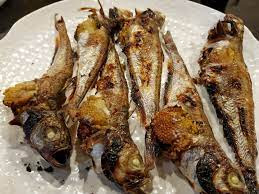

Dorumook is usually cooked as a spicy stew or is charcoal-grilled to enjoy its flesh and egg, but it can be fishy and smelly so there are vocal love-hate opinions about dorumook. It's a very cheap and common fish in the Korean winter so it's typical local seafood produce in markets in Gangwon province. If you are a seafood lover, how about sampling charcoal-grilled dorumook? You may just call it 'Eun-eo' as soon as you taste it :)


Bon Appétit!

Sunday, September 5, 2021

[Food] Altang (Spicy Fish Roe Soup, 알탕)

 [Food]

[Food] Altang (Spicy Fish Roe Soup, 알탕)


Since Koreans started catching and eating pollack in the East Sea of the Korean peninsula, pollack has mostly been used for  medicinal purposes and for consumption within Korea. Pollack is one of the most popular and common fishes (despite the fact that it can now only be caught in Russia due to its sharp decrease in number in Korea owing to climate change), and people usually cook it in the form of a stew and soup for the cold winter season.

People don't eat only the fillet of pollack, but also its intestines and roe. The intestines and roe of pollack are used for clear mild soup or spicy soup. People love them both because they complement soju drinkers well, and they call it 'Altang (Spicy Fish Roe Soup, 알탕)'.


Before cooking the intestines and roe, they have to go through a process to remove its pungent fish-like smell, then it is boiled with seafood stock, vegetables and spicy or mild seasoning to give a salty, spicy and savory flavor. Pollack basically has a very refreshing and savory flavor, so it can be easily cooked. For example, people in the north-eastern region of Korea usually use grinded garlic, radish and salt only for pollack soup.

Intestines and roe gives a very savory and rich marine flavor. It may appear grotesque to you, but its taste is guaranteed.


The best season for eating altang is in winter because pollack is usually caught in the winter, and the cold season maximizes the hot and refreshing flavor of hot altang :) You easily can find altang at Korean restaurants near the coast.

Jeonnong Traffic Circle in Dongdaemun district, Seoul is the most popular area for finding the best altang in Korea :) So if you want to taste hot exotic seafood in Korea, please visit Jeonnong Traffic Circle :)

Bon Appétit! 

Wednesday, July 14, 2021

[Food] Mineo (Surf Fish, 민어)

 [Food]

[Food] Mineo (Surf Fish, 민어)


Since the Chosun dynasty within the Korean peninsula more than 500 years ago, Mineo (Surf Fish, 민어) has been an unique seafood for stamina and a gourmet dish for people. It's usually been eaten by the royal and noble family because it is rarely caught and is expensive due to the lack of cold storage technology.

The Chinese character for Mineo's 'Min(民)' means 'common people', which is ironic because a common person has caught but not actually eaten, it because of its cost. Mineo is considered one of the tastiest types of fish in Korea with people saying that the sliced raw fillet of mineo gives the best taste. Its flesh, air bladder, skin and bones are all precious ingredients for fishcake, stew, spicy cold dishes and soup that can be cooked with mineo.


Mineo tastes best in summer and winter because it fattens itself for the breeding season and survives the winter :) Moreover, male mineo tastes better than female mineo because it doesn't lose fat even in the breeding season (August and September).

They are usually caught by sea fishing in the West Sea (the Yellow Sea) of Korea, along the coast of Jeolla province. This is one of the reasons why mineo has become so expensive. However, people who ever eaten mineo as a raw fillet say raw mineo fillet is one of the best fish they have ever eaten.

Chewy and soft with marine and savory taste :) Some people say it's even better than eating raw tuna fillet.

Mineo (surf fish) belongs to the same family as the croaker/yellow corbina, but is much bigger


Bon Appétit! 

Wednesday, April 7, 2021

[Food] Jukkumi (webfoot octopus, 주꾸미)

 [Food]

[Food] Jukkumi (webfoot octopus, 주꾸미)


Jukkumi Bulgogi (Spicy webfoot octopus bulgogi in grill)

Jukkumi (webfoot octopus, 주꾸미) isn't a very well-known or popular seafood ingredient, even for many Koreans. I'd say it's a minor seafood ingredient compared to octopus and poulp which are very well-known for being eaten raw, steamed or  as a spicy stir1fried dish. It usually lives in the coastal areas of China, Korea and Japan (except for Hokkaido). It crawls among the rocks and pebbles of the shallow coast, and usually hides in caves and holes to avoid becoming prey to larger predators.

Jukkumi usually grows as big as your hand with its 8 legs, and spawns its egg from December to February (which means they taste best in the autumn before the breeding season). Koreans catch and eat them from March, after the breeding season, to protect them from perishing, and their eggs actually do not taste very nice; much like uncooked rice or chestnut.

Freshly caught jukkumi with ink that they just shot


I marinated jukkumi to cook spicy jukkumi-bulgogi :)

Fresh jukkumi is very chewy and gooey with a tough flesh that you have to chew a lot in your mouth :) Some people don't like its texture but most people love jukkumi's chewy and gooey flesh.

Jukkumi can be stir-fried, barbecued or boiled for soup but the best recipe (in my personal opinion) is spicy barbecue on grill. When jukkumi's unique texture is coated with a smoky and spicy flavor, it makes a marvelous synergy of taste :)


Put some well-barbecued spicy jukkumi into steamed rice or roasted seaweed with some spring onions or chives. It's really nice but it can be a little spicy.

I had jukkumi with steamed rice, and strawberries for dessert :)

There are many typical spring foods in Korea including strawberry, sole, mugwort, spring herbs, and jukkumi (webfoot octopus) is one of them too :)

This lovely spring, how about savoring a nice jukkumi dish? I'm sure that it will fill you with the blossoming energy of spring :)

Bon Appétit!

Tuesday, February 23, 2021

[Food] Gogalbi (Mackerel Ribs, 고갈비)

 [Food]

[Food] Gogalbi (Mackerel Ribs, 고갈비)


In the 1970s, ordinary people and university students in Busan weren't very wealthy. Even though they wanted to eat meat (beef, pork and chicken), it was not affordable for them, though fish was.

Like today, most mackerel in Korea was traded in public fish markets in Busan so citizens enjoyed eating mackerel because it was the most common and least expensive fish (as is the case today). Koreans' favorite mackerel recipe is roasting, so they usually eat roasted mackerel which Busan citizens call 'Gogalbi (Mackerel Ribs)' which is an abbreviation of 'Godeungeo Galbi (Mackerel Ribs)'. Actually mackerel doesn't have any ribs, but Koreans called it 'Mackerel Ribs' because it reminded them of roasted pork rib when mackerels are roasted with thick smoke and plenty of fat.


The Gogalbi recipe was invented in Busan. Its only difference from usual roasted mackerel is that they put some spicy sauce on mackerel for better taste. Gogalbi sauce is usually hot and spicy with lots of spicy chili and garlic.


Moreover, an important thing is that only fresh mackerels must be used for the best taste of gogalbi :) Gogalbi is often salty but gives you a smoky,savory and refreshing taste.

[Food] Gogalbi (Mackerel Ribs, 고갈비)


In the 1970s, ordinary people and university students in Busan weren't very wealthy. Even though they wanted to eat meat (beef, pork and chicken), it was not affordable for them, though fish was.

Like today, most mackerel in Korea was traded in public fish markets in Busan so citizens enjoyed eating mackerel because it was the most common and least expensive fish (as is the case today). Koreans' favorite mackerel recipe is roasting, so they usually eat roasted mackerel which Busan citizens call 'Gogalbi (Mackerel Ribs)' which is an abbreviation of 'Godeungeo Galbi (Mackerel Ribs)'. Actually mackerel doesn't have any ribs, but Koreans called it 'Mackerel Ribs' because it reminded them of roasted pork rib when mackerels are roasted with thick smoke and plenty of fat.


The Gogalbi recipe was invented in Busan. Its only difference from usual roasted mackerel is that they put some spicy sauce on mackerel for better taste. Gogalbi sauce is usually hot and spicy with lots of spicy chili and garlic.


Moreover, an important thing is that only fresh mackerels must be used for the best taste of gogalbi :) Gogalbi is often salty but gives you a smoky,savory and refreshing taste.


Bon Appétit!

Thursday, February 11, 2021

[Food] Nakji (Poulp / small octopus, 낙지)

 [Food]

[Food] Nakji (Poulp / small octopus, 낙지)


There's an exotic food in Korea as tasty as deep-fried tarantula legs in Cambodia: Nakji (poulp / small octopus), which is caught in the sea off of the west coast of the Korean peninsula. Nakji is very well-known because Koreans usually enjoy eating the moving legs of nakji, which wiggle a lot.


Even though they are cut and chopped off, their nerves are still active so their legs keep moving and wiggle. Its sucker even sticks to your insides and the roof of your mouth, which makes you feel sorry for eating them alive. I'm sure you don't have the guts to eat live nakji, so there are some alternative ways for cooking nakji :)

Given that nakji's flesh is very chewy and full of protein, it's very nice when stir-fried with spicy sauce, grilled and boiled. Nakji-bokkeum (Stir-fried spicy poulp) and Yeonpo-tang (Poulp soup) are typical dishes of nakji.


Nakji-bokkeum (Stir-fried spicy poulp) is a very spicy and savory dish,l which Koreans love eating with soju (Korean rice wine). It goes really well with pork belly, bean sprout and rice.


Yeonpo-tang (Nakji soup) is very mild, full of seafood and savory with clean soup and a lot of vegetables. It's the best choice for people who cannot eat hot and spicy food because they can enjoy nakji without any risk :)

Nakji is also named 'food for men' in Korea because it provides one with stamina and taurine which helps people recover from fatigue. No wonder many people love it :)

Bon Appétit!

Thursday, February 4, 2021

[Food] Agwi-jjim (Steamed Monkfish, 아귀찜)

 [Food]

[Food] Agwi-jjim (Steamed Monkfish, 아귀찜)


We all know that we should not 'judge a book by its cover' but people usually do when they encounter many things in the world. However, I would recommend you do not judge food by its looks, if you ever visit Korea. You will see ugly ingredients often tasting very delicious.

Agwi (Monkfish, 아귀) is a typical ugly-looking fish that is caught in the east coast of the Korean peninsula. In the past, it was usually thrown back into the sea or used as fertilizer or cooked in the form of soup for poor people, but it turned out to be an excellent seafood side dish for soju-drinkers after one old lady with a lump in her face in Masan city cooked monkfish into a steamed dish with Korean spices.


February is the best season for eating agwi-jjim (steamed monkfish) because they are usually fed up and fat before March and April, which are their breeding season. The flesh of monkfish is very chewy and full of high protein and vitamin A with abundant zinc and iron. In particular, agwi-ae (liver of monkfish) contains soft fat; its texture is very silky so people call it 'Foie gras of the sea'. Please don't miss it or others will take it before you do. Monkfish is among the most expensive fish in Korea these days.


The chopped meat of monkfish is steamed, then mixed with warty sea squirts, spicy and sticky sauce, bean sprouts and water parsley. Masan is the origin of agwi-jjim, but Gangneung is also famous for agwi-jjim that is made of freshly caught monkfish. Today agwi-jjim is a typical home meal in Gangneung. Its only difference with Masan style agwi-jjim is more shitake mushroom and water parsley.


Bon Appétit!

Sunday, January 24, 2021

[Food] Gejang (게장, Marinated Crab)

 [Food]

[Food] Gejang (게장, Marinated Crab)


Koreans have loved marinated and fermented food for a long time, particularly when it comes to seafood. Seafood couldn't be stored for a long time so they invented recipes that could do so preventing them from becoming rotten and stale.

Gejang (게장, Marinated Crab) is a traditional Korean marinating recipe which marinates live crab caught in the autumn (usually blue crab caught from the West Sea, but freshwater crab can be used too) in soy sauce with garlic and spicy chili, to be eaten the following summer as a side dish. It can be marinated in spicy chili sauce too but Koreans usually prefer soy-sauce marinated crab because it's more savory and has a deeper flavor of crab.


Recipes of gejang were written in many traditional cookbooks in Korea since the 1600s (Chosun Dynasty), but some people argue that gejang was eaten even before then. Gyeongsang (South-east region), Jeonra (South-west region) and Jeju Island are all famous for gejang, and each region has its own recipe with its unique ingredients and style.

Ganjang Gejang (Soy sauce marinated crab)

Yangnyeom Gejang (Spicy sauce marinated crab)

The flesh, intestines and egg of a crab is very soft, silky and even slimy with a savory, salty and sea-like flavor. Because of its salty and savory flavor, Koreans usually call it 'Babdoduk', which means 'Rice Thief' in Korean, because it makes people eat more quantities and more rapidly than other dishes.

However, people (including Koreans) usually think gejang looks gross and too exotic with its fishy smell, so it is a food of strong likes and dislikes.

Saewoojang (Marinated shrimp, same recipe with gejang but different ingredient)

Typical Korean meal with gejang and saewoojang

If you think you are a seafood or crab lover, how about trying gejang? It will be a great challenge, but also great fun :)


Bon Appétit!