[IPYG]
[IPYG] IPYG and the National Youth Council of Malawi's Peace Education in Malawi

Chairman ManHee Lee is the head representative of the global peace organization HWPL (Heavenly Culture, World Peace, Restoration of Light), which is striving for the enactment and implementation of the international peace law 'Declaration of Peace and Cessation of War (DPCW)'. The DPCW is a legal instrument comprised of 10 articles and 38 clauses that can end wars and hostilities throughout the world. HWPL is also spreading a culture of peace and implementing peace education.
Chairman ManHee Lee experienced the cruelty and tragedy of war as a veteran of the Korean War. This is one of the reasons why he founded a global peace campaign as the head of HWPL. He has traveled the globe more than 35 times to meet and persuade politicians, legal experts, journalists, professors, peace activists, civil organization leaders, heads of tribes and others to unite them for the work of peace. The significant fruits borne out of his hard work are the World Alliance of Religions' Peace (WARP) Summit and HWPL Peace Committee. The DPCW was drafted and finalised by the HWPL Peace Committee.
How, you may wonder, do I know this? About 10 years ago, when I had just been discharged from military service, I came to know HWPL and Chairman ManHee Lee while researching the topic of civil conflicts to satisfy my curiosity in ongoing global issues. At that time, the island of Mindanao in the Philippines was suffering from a major civil conflict that lasted more than 40 years, and Chairman ManHee Lee and HWPL resolved this conflict through non-violent means.
Chairman Lee brought an end to the conflict in Mindanao by holding a peace talk between the warring Catholic and Islamic groups. Before the talk, HWPL and Chairman ManHee Lee held a Peace Walk to spread the culture of peace in Mindanao with the many locals who had gathered out of a desire for peace.
Chairman ManHee Lee's pressing appeal today is that humanity unites for sustainable peace in order to pass on the legacy of peace to future generations worldwide. He doesn't just talk peace, but has worked tirelessly for it through practical peace campaigns for over a decade.
I decided to become a supporter of HWPL and Chairman ManHee Lee's peace initiatives because I also desire a world of peace for all posterity.
Today I'd like to introduce an article regarding HWPL's affiliate youth group, IPYG. IPYG and the National Youth Council of Malawi's Peace Education in Malawi. :)
IPYG and the National Youth Council of Malawi Successfully Conclude Youth Peace Leadership Education
More than 1,000 Young People Join, Establishing a Peace Education Model Through Collaboration Between Government and Youth Networks
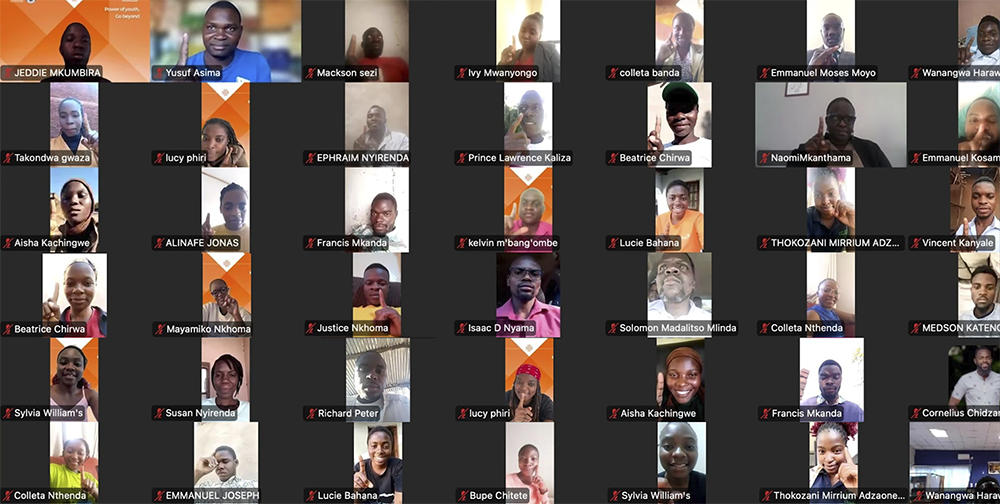
An international peace education program aimed at helping young people grow into leaders who promote peace in their communities and countries was held in Malawi.
From May 28 to June 25, IPYG and the National Youth Council of Malawi (NYCOM) jointly conducted the 2026 Youth Empowerment Peace Class (YEPC) and successfully concluded the program.
The program was designed to strengthen collaboration between a government institution and a youth network while helping young people in Malawi understand the value of peace and develop the capacity to become peace leaders who will contribute to their communities and the country’s development.
IPYG designed the overall curriculum, provided the peace education content, and managed the online program. Meanwhile, NYCOM recruited participants and promoted the program through youth organizations and youth leader networks across the country. Through the program, participants actively engaged in the training while reflecting on the meaning of peace in their respective roles.
This program also aligns with the direction of Malawi 2063, the country’s long-term national development strategy, which identifies youth empowerment, civic participation, and social development as key priorities. IPYG and NYCOM designed the program to enable young people to become active contributors to peacebuilding and community development, rather than remaining beneficiaries of these efforts.
The program consisted of five sessions: three sessions on Heritage, one session on Artificial Intelligence (AI), and one session on Youth Leadership.

The Heritage sessions explored religious and cultural heritage from around the world, highlighting how understanding diversity and respecting different cultures and religions form the foundation of peaceful communities. Participants learned that peace is a shared heritage to be passed on to future generations through examples such as cultural festivals around the world and the peacebuilding experience in Mindanao, the Philippines. They also reflected on how practicing and promoting peace in their own lives can become a form of “living heritage.”
The AI session, titled “The AI Vaccine: Building Resilience for Peace,” introduced generative AI as a practical tool for young peace leaders. Participants learned how to use major AI platforms, including ChatGPT, Gemini, Claude, and Grok, while also exploring the importance of analytical thinking and resilience as essential competencies for the future.
The session particularly emphasized the message, “AI does not create peace; people create peace. Technology is a tool, and the human heart is the compass.” It highlighted the importance of using technology responsibly and ethically.
The final Youth Leadership session was led by Alick Kampeza, a peacebuilding and social cohesion specialist from the Department of National Unity under Malawi’s Ministry of Local Government and Rural Development. Kampeza contributed to the enactment of the Peace and Unity Act (2022), the establishment of the Malawi Peace and Unity Commission and local Peace and Unity Committees, and the development of Malawi’s National Action Plan on Youth, Peace and Security in line with United Nations Security Council Resolution 2250 (UNSCR 2250). He currently supports national and local initiatives across Malawi to promote peace, social cohesion, and inclusive governance.
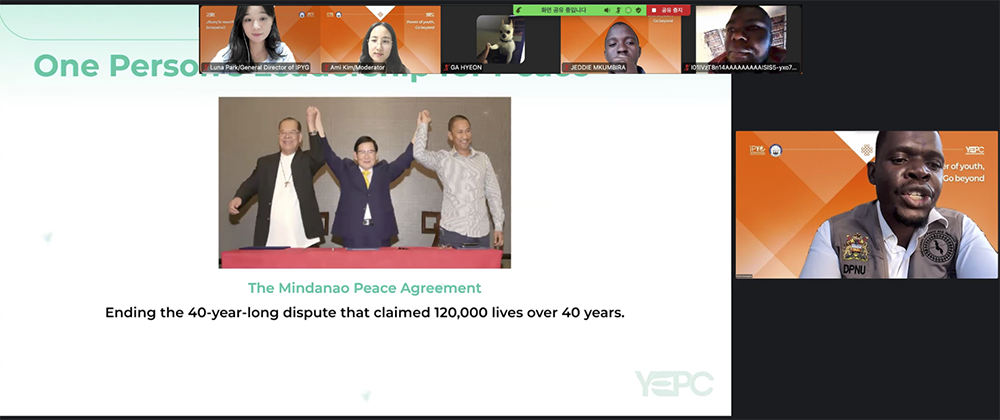
During the session, Kampeza emphasized that young people can become key players in building peaceful communities and explained the impact of conflict and violence on young people and their communities. He also introduced the youth leadership curriculum of HWPL and IPYG in connection with Malawi’s peacebuilding and social cohesion efforts, explaining that youth leadership plays an essential role in facilitating dialogue, preventing conflict, and fostering resilient and peaceful communities.
He added, “Through this program, we have reaffirmed that young people are not merely beneficiaries of peace, but key actors in building peaceful, inclusive, and resilient communities.” He continued, “The collaboration among IPYG, NYCOM, and the Government of Malawi has helped youths broaden both their practical knowledge of peace and their international perspectives. It serves as a meaningful example of international cooperation for youth empowerment.”

Participants shared that the program helped them gain a new understanding of the relationship between cultural heritage and peace and recognize the importance of respecting different cultures and religions.
Juliana Paul, a student at the Malawi University of Science and Technology (MUST), said, “I came to see religion not only as cultural heritage but also as a means of building peace.”
Emmanuel Joseph, a participant, commented, “The message that inspired me most was that fear arises when we do not know one another. I realized that understanding others is the starting point of peace and communication.”
Solomon Madalitso Mlinda, a program coordinator at NYCOM, said, “Peacebuilding is one of NYCOM’s key areas of focus. We are pleased to support young people in Malawi in participating in an international educational program. Going forward, we will expand the program through offline training so that more young people will have access to peace education.”
More than 1,000 young people from across Malawi registered for the program, and a cumulative total of 1,005 participants attended the five live sessions. Online learning through recorded lectures is continuing, and participants who complete the entire program will receive a certificate jointly issued by NYCOM and IPYG.
Looking ahead, NYCOM plans to expand offline YEPC activities and establish Youth Engagement & Peacebuilding Working Groups (YEPW) at universities and within local communities. Working with youth leaders, including Mercy Mulonda, former vice president of the Student Representative Council at the University of Malawi, NYCOM also plans to support program graduates in designing and implementing community-based peace projects.
HWPL Official Homepage


No comments:
Post a Comment