[HWPL]
[HWPL] HWPL's Pacific Nuclear Legacy International Human Rights Webinar

Second Pacific Nuclear Legacy International Human Rights Webinar Discusses Preserving Nuclear Records and Passing on a Legacy of Peace to Future Generations
On May 9, HWPL held the Second Pacific Nuclear Legacy International Human Rights Webinar online under the theme “Nuclear Records as Global Heritage: Securing Peace in a Changing Climate.”
The webinar was a follow-up to the first International Human Rights Webinar, titled “Nuclear Legacy: Enduring Impacts in a Changing Climate,” which was held in February. While the first webinar highlighted the connection between the damage caused by nuclear testing in the Marshall Islands and the climate crisis, the second focused on preserving records, testimonies, and community memories related to nuclear testing in the Pacific and exploring ways to pass them on as a legacy of peace for future generations.
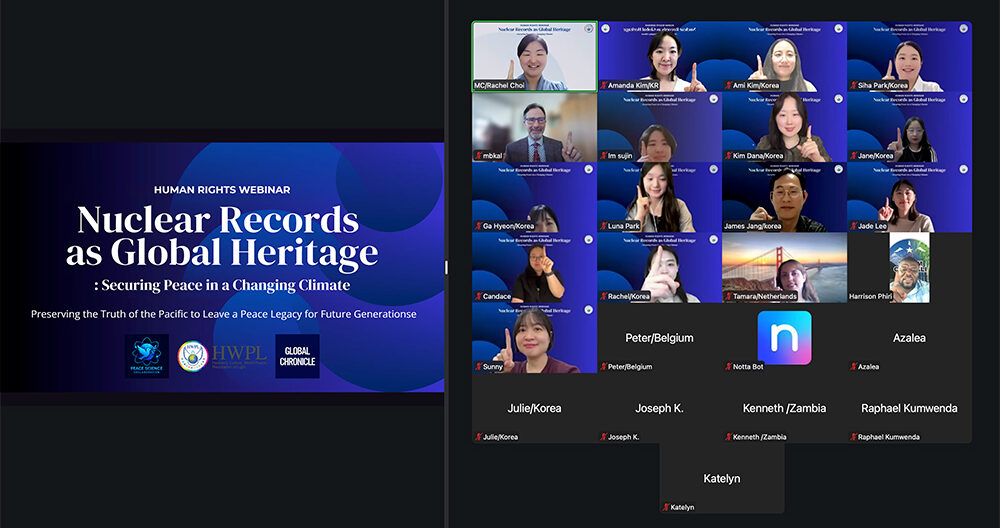
Representatives from the legal sector, civil society, religious communities, education, the media, and youth from countries including Fiji, Belgium, Zambia, Malawi, and the Republic of Korea attended the webinar. Participants exchanged views on the importance of preserving nuclear test records and ways to strengthen international cooperation.
In his opening remarks, Justice Thushara Rajasinghe of the High Court of Fiji stated, “Nuclear records are not merely historical documents, but testimonies to human suffering and resilience, as well as to the need to prevent future nuclear catastrophes.”
Andy Vermaut, founder of the Belgian human rights organization PostVersa, emphasized the importance of preserving nuclear records as part of humanity’s shared heritage. He said, “Evidence and memories of nuclear testing are at risk of disappearing due to climate change and rising sea levels.”
During the first session, representatives from religious communities, education, civil society, and the media gave presentations under the theme “The Roles We Can Play in Preserving Records and Memory.”
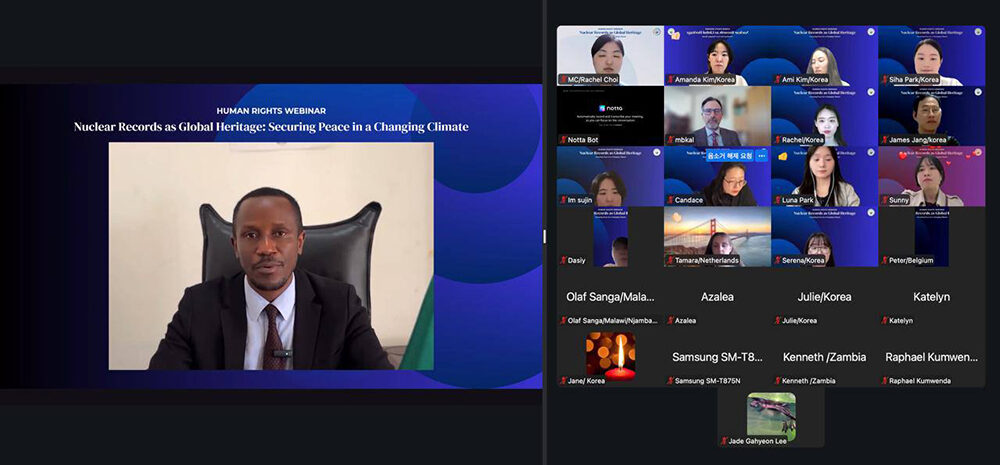
Godfrey Kaoma, Assistant Director at the Department of National Guidance and Religious Affairs under Zambia’s Office of the Vice President, said, “Truth is passed down not only through records, but also through testimonies and teachings of faith.” He emphasized that preserving records is not merely an act for the sake of the past, but a responsibility toward future generations.
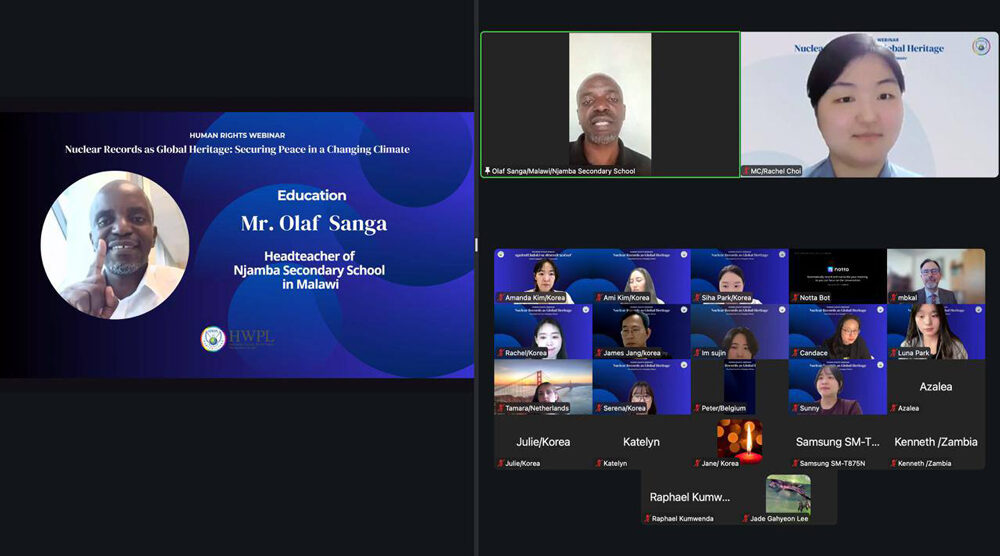
Olaf Sanga, Principal of Njamba Secondary School in Malawi, explained the importance of addressing nuclear legacy in education, stating, “Students need to understand the impact nuclear testing has had on people and the environment.”
Andrew Junior Mwima, founder of the Mental Health and Anti-Drug Abuse Organisation in Zambia, said, “The legacy left to young people today may not be a relic of the past, but an unresolved social challenge.” He emphasized that peace must be built through responsible action rather than silence.
Ousman Kaliati, a journalist with the Times Group in Malawi, spoke about the role of the media, stating, “Continuing to raise awareness of international issues such as nuclear legacy is one of the media’s important responsibilities.”
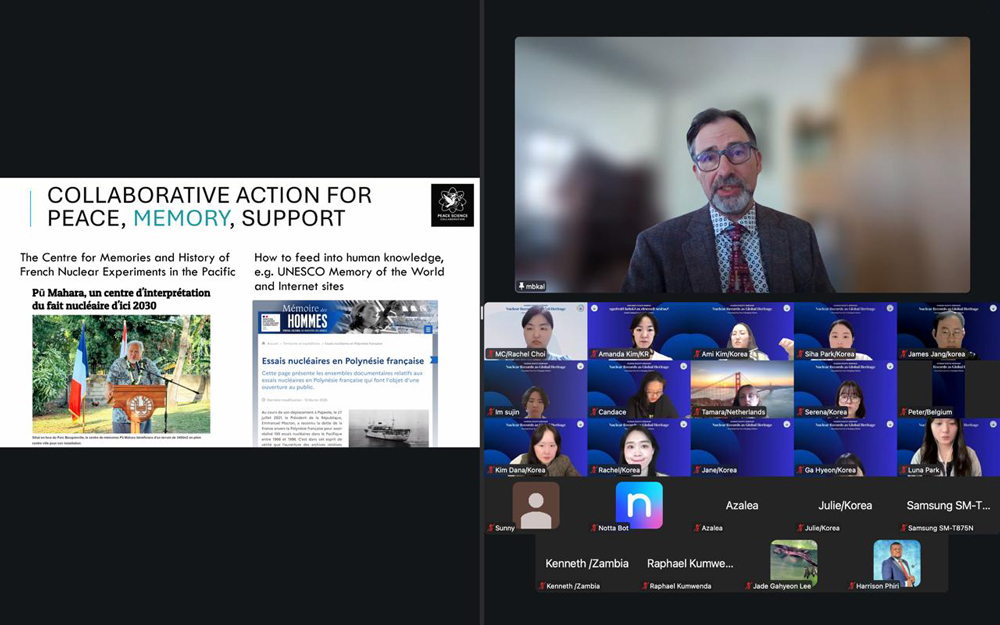
In the second session, Martin B. Kalinowski, Coordinator of Peace Science Collaboration and a former official of the Comprehensive Nuclear-Test-Ban Treaty Organization (CTBTO), delivered a presentation titled “Data from Past Nuclear Tests.”
He stated, “More than 2,000 nuclear tests have been conducted worldwide since 1945, with large-scale atmospheric nuclear testing concentrated particularly in the Pacific region.” He further explained, “The effects of nuclear testing extend beyond health damage to forced displacement, economic loss, psychological suffering, and broader impacts across society. Scientific analysis and the use of modern data are essential for the recovery of affected communities.”
He continued, “The Comprehensive Nuclear-Test-Ban Treaty must enter into force as soon as possible. To ensure that the damage and lessons of nuclear testing are not forgotten, we must preserve these memories and establish a cooperative framework involving residents of affected areas and experts so that radiation risks can be addressed effectively.”
During the final session, participants shared a range of practical measures for preserving records and building peace. Harrison Phiri, Manager of Radio Delight Kwitonta in Zambia, explained that digital archiving and the preservation of photographs and oral histories are also forms of peacebuilding that individuals can carry out.
The webinar served as an opportunity to reaffirm that preserving records of the past is an important foundation for building peace for future generations.
HWPL Official Homepage
No comments:
Post a Comment